Pages

Thursday, June 6, 2019

Hurumanu - Plants

AIM: TO LEARN ABOUT THE NATURE OF PLANTS


Plants fall into two categories:

1. Evergreen
2. Deciduous
Image result for deciduous
Deciduous
Image result for evergreen
Evergreen

Find three examples of each:

Evergreen: 
1. Pine tree
2. Eucalyptus tree
3. Kauri

Deciduous;
1. Oak tree
2. Spruce
3. Maple

LEAVES


Image result for simple leaf

Simple                                 Compound   

Choose a leaf and do a leaf rubbing.

Example: 
Plant type: Deciduous / Evergreen
Leaf type: Simple / Compound
Leaf colour: Green
Photo of leaf: Image result for simple leaf
Plant drawing:Image result for tree drawing


MY LEAF COLLECTION


1.
Plant type: Deciduous / Evergreen
Leaf type: Simple / Compound
Photo of leaf:


2. 
Plant type: Deciduous / Evergreen
Leaf type: Simple / Compound
Photo of leaf:

3.  
Plant type: Deciduous / Evergreen
Leaf type: Simple / Compound
Photo of leaf:

4. 
Plant type: Deciduous / Evergreen
Image result for deciduous

Leaf type: Simple / Compound
Photo of leaf:

5.  
Plant type: Deciduous / Evergreen
Leaf type: Simple / Compound
Photo of leaf:


RESEARCH 4 TYPES OF PLANT GROUPS


  1. Carnivorous plants
  2. Pine trees 
  3. Fruit trees
  4. NZ Natives


You will need to do the following:


  1. Title: NZ Natives
  2. Examples: 


  • Ponga
  • Maunka
  • Kowhai
  • Pohutakawa 


Habitat: (select one from the list)

  1. Desert / beach / mountains / swamp / plains / forest 
Climate (select one from the list)

  1. Hot / warm / cold
  2. Rainy / dry / 
  3. Windy / still
Conclusion
In conclusion if we don't start looking after the trees in future generations they will start disappearing and we will only have memories or photos to look back on, I say we should look after our native trees and leaves.


Wednesday, June 5, 2019

Hurumanu - Mars


Aim: To learn about Mars exploration.
1. Rover facts 
2. Design, Draw and Make a Rover
3. Mars facts

1. Rover facts: 


What are the 5 parts for?
Link: Rovers 5 parts
Fill in the table below.


Name:
Purpose:
Wheels
To move around mars to experiment and test. 
Solar Panel
To reflect on the sun.
Laser
Burning the rock taking samples 
Camera
To take photos, and send them to NASA
Shovel, rock pick,drill
Shovel: Picking up bits rock for taking samples 


2. In groups of 3 you will Design, Draw and Make a Mars Rover out of Lego Technics.
Materials:

  1. Lego Technics
  2. A4 paper
  3. Pencil
  4. Ruler
  5. Eraser
The drawing and model must have:
  • 6 wheels
  • 1 camera
  • 1 tool at the front than includes a shovel, pick and drill.
  • 1 solar panel
  • 1 laser that points at the ground


 ( Take a photo and upload  your mars rover onto your blog.)

3. Mars Facts
Link: Facts

You will need to find out the following:


Fact
Earth
Mars
Picture of planet


Image result for pictures of earthImage result for pictures of mars
Length of 1 year
365 days687
Length of 1 day
24 hours1d 0h 37m
Distance from the sun
149.6 million km227.9 million km
Distance from Earth.
Earth orbits the sun 100,000 times closer than the Oort Cloud, at an average of 92,955,807 miles (149,597,870 km). The distance from Earth to the sun is called an astronomical unit, or AU, which is used to measure distances throughout the solar system.
Close Approach is when Mars and Earth come nearest to each other in their orbits around the sun. Close is a relative term. The minimum distance from the Earth to Mars is about 33.9 million miles (54.6 million kilometers).
Gravity:
9.807 m/S23.711 m/S2
Colour:
BlueReddish
Temperature
-88 to 57 CAverage -81 degrees F
Rainfall"Because Earth's average annual rainfall is about 100 cm (39 inches), the average time that the water spends in the atmosphere, between its evaporation from the surface and its return as precipitation, is about 1/40 of a year, or about nine days."The low density of the Martian atmosphere means that winds of 18 to 22 m/s (65 to 79 km/h) are needed to lift dust from the surface, but since Mars is so dry, the dust can stay in the atmosphere far longer than on Earth, where it is soon washed out by rain.
Atmosphere
  1. nitrogen, oxygen, argon, others  

  1. mostly carbon dioxide, some water vapor
  2.    
Surface
  1. Surface of the Earth. Most of the Earth's surface (70%) is covered with water, and the remaining 30% is taken up by the seven continental landmasses. However, underneath the water that fills the oceans, and the dirt and plants that cover the continents, the Earth's surface layer is made of rock.
  1. Mars is a terrestrial planet with a thin atmosphere, having surface features reminiscent both of the impact craters of the Moon and the valleys, deserts, and polar ice caps of Earth.
Moons and names
  1. 1  
  2. Earth moon
  1. 2
  2. Phobos Deimos

Conclusion: Write about what you have learnt.
I have learnt that mars is very far away and very far from the sun. The name of the mars moon is Phobos Deimos and I have never heard that name before. Also the mars surface is terrestrial planet with, a thin atmosphere when there's more surfaces on earth, and the colour of mars is reddish you can see that on my table chart. 

Friday, May 31, 2019

Drama

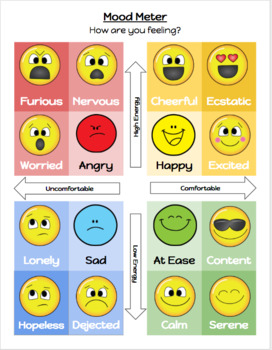
Image result for mood meterToday I'm feeling cheerful and excited because I'm going to see my nana and Granddad today

On Tuesday we were talking about puberty and changes for what happens when your going thorough puberty and what your going to feel or why your feeling that. And we had to record a puppet show of emotion talk for what your feeling and your actions towards others.

Monday, May 20, 2019

The Feet Can Measure The Height

THE FEET CAN MEASURE THE HEIGHT

The bones of the feet can tell a lot about a person. What do feet reveal about a person's height? Forensic anthropologists team up with law enforcers to help solve crimes.
Bones of the feet can reveal an interesting fact about an individual. Let's combine math with forensics to see how.

Image result for foot chart sizeImage result for foot to height ratio chart
Aim:  To use forensic science techniques to measure the height of a criminal.

Material:

  1. A meter ruler
  2. Your foot
  3. Yourself
  4.  

Steps:


  1.  Get a meter ruler 
  2.  Measure the foot length
  3.  Measure the height
  4.  Record on the chart
Findings:


Name
Foot  (cm)
Height (cm)
Chloe T211.44
Chloe M251.62
Keghan241.50


Divide the length of each person's foot by his/her height.Then multiply it by 100. 

Conclusion
My foot length was 21 cm and my height is 1.44 cm and the other Chloe's foot size is 25 cm and her height is 1.62 cm Keghan's foot size is 24 cm and height is 1.50 

Thursday, May 9, 2019

Maths DLO Addition and subtraction

I am going to be showing you my maths learning and what I have been doing


Reflection on this weeks maths
My reflection was: Solve subtraction equations using "Family Of Facts"

Monday, May 6, 2019

To filter dirty water using house hold materials

Aim: To make a filtration plant using household materials.

Image result for filtration science experiment
Water Filtration Plant

What is filtration?


Filtration is separating solids from liquids by adding a medium through which only the liquid can pass. 

Examples are:

  1.  
  2.  
  3.  

Materials

1. Plastic bottle
2. Scissors
3. Filter paper
4. Funnel
5. Sand
6. Small Stones
7. Dirty water


Process - ( use verbs or doing words in each step )


Step 1

Get a plastic bottle after that cut the bottle.

Step 2

Put the top half of the bottle upside down.

STEP 3

Add layers of sand into the bottom of the cone.

STEP 4

Get 1 cup of dirty water and some little stones.

STEP 5

Pour dirty water into the bottle then slowly pour the stones in.

Findings
Dirty then went clear 

Write a short sentence about the water every 1 minute. 
Include 'How much water has filtered through', 'How fast it is dripping through', and 'How clear the water is'.

Minutes                          1.         2.          3.           4.           5.
Drops per minute: 13
Water colour: Dirty/clear
Conclusion: The water that flowed through the filter was clear with a green tinge. The water flowed at 13 drops per minute. The bark soil leaves sat on top of the pebbles. It was starting to drip a little slow but then it dripped slowly. The water was dirty but after it a little clear.

Friday, May 3, 2019

Hurumanu - What is that white powder?

Aim: To learn about the makeup of different white powders.

There are  a number of different white powders in our everyday life. Some of these are harmful and others are not. Test the four white powders listed to see which one has been found at the airport.

Here are some examples of everyday kitchen white powders.

Flour, Cornflour, Sugar, Salt, Baking Soda, Baking Powder, Icing Sugar, Tartaric Acid

Citric Acid, Gluten Free flour

You will be given a small amount of 4 white powders on your cardboard. On the black cardboard using a magnifying glass look at the powders.
Look at them under your magnifying glass and record what you see. 

These are the four powders we will be using. Upload a photo of each powder.

1.  Cornflour
2.  Baking Soda
3.  Salt
4.  Sugar

Before you add the iodine, vinegar or water you will need to divide each powder into 3 sections. 


Materials
1.  Cornflour
2.  Salt
3.  Baking soda
4.  Sugar 
5.  Vinegar
6.  Water 
7.  Iodine
8.  Cardboard

Steps
1. Get some black card 

2. Fold it into 4 quarters
3. Write the materials
4. Put the different materials on the four corners
5. Make the materials into 3 thirds
6. Add the 3 different liquids   
7. Then take two photos


Conclusion:
For this experiment I have learn't to identify the different types of liquids and the powders and find out if there is reaction or not. 

Findings:
I found out that the iodine changed the cornflour purple


Sugar
Salt
Baking Soda
Cornflour
Appearance
WhiteWhiteWhiteWhite
Texture
MediumSmallSmallSmall
Smell
No SmellSaltyNo smellFloury
Iodine
Changes colourAbsorbsAbsorbs/HardensSlides
Water
WetAbsorbsAbsorbs/HardensSlides
Vinegar
WetFizzes/HardensAbsorbsSlides